
Her plan, since the day I met her, was to get back to her hometown. Over the next few months, I would see Angela* at Church of the Reconciler a few times a week. Occasionally she would update me on her plan. Oftentimes, her plan to return home had been thwarted by the plans of others.
We’ve been making our way in the past few blog posts through the story of Joseph as told in Genesis 37 - Genesis 50, with an eye towards our mission at COTR to “restore people to loving relationships with themselves, with their community, and with God.”
You could summarize the story up to this point as a story of competing plans or of plans gone wrong. Joseph has his plans, his brothers have a different plan, and their father, Isaac, has his own plans. In Genesis 50:20, Joseph recognizes this dynamic. More importantly, he recognizes God’s plan when he says to his brothers, “You planned it for evil, but God planned it for good.”
God’s good plan is a life-giving plan. Walter Brueggemann writes, “It is no wonder that Joseph now announces the substance of the overriding purpose of God. It is for life (emphasis mine).” More specifically, it is for a life of restored relationship with God.
We see, in the story of Joseph, that restoration with God looks like homecoming. After Joseph speaks to his brothers about the life-giving plan of God and tells them not to be afraid, the narrator says that Joseph “comforted them” (Genesis 50:21). Brueggemann explains, “The word of comfort is speech which penetrates to the deepest dimension of existence, where homelessness can be dealt with…The persistent good plan of God finally has given comfort and promised homecoming.”
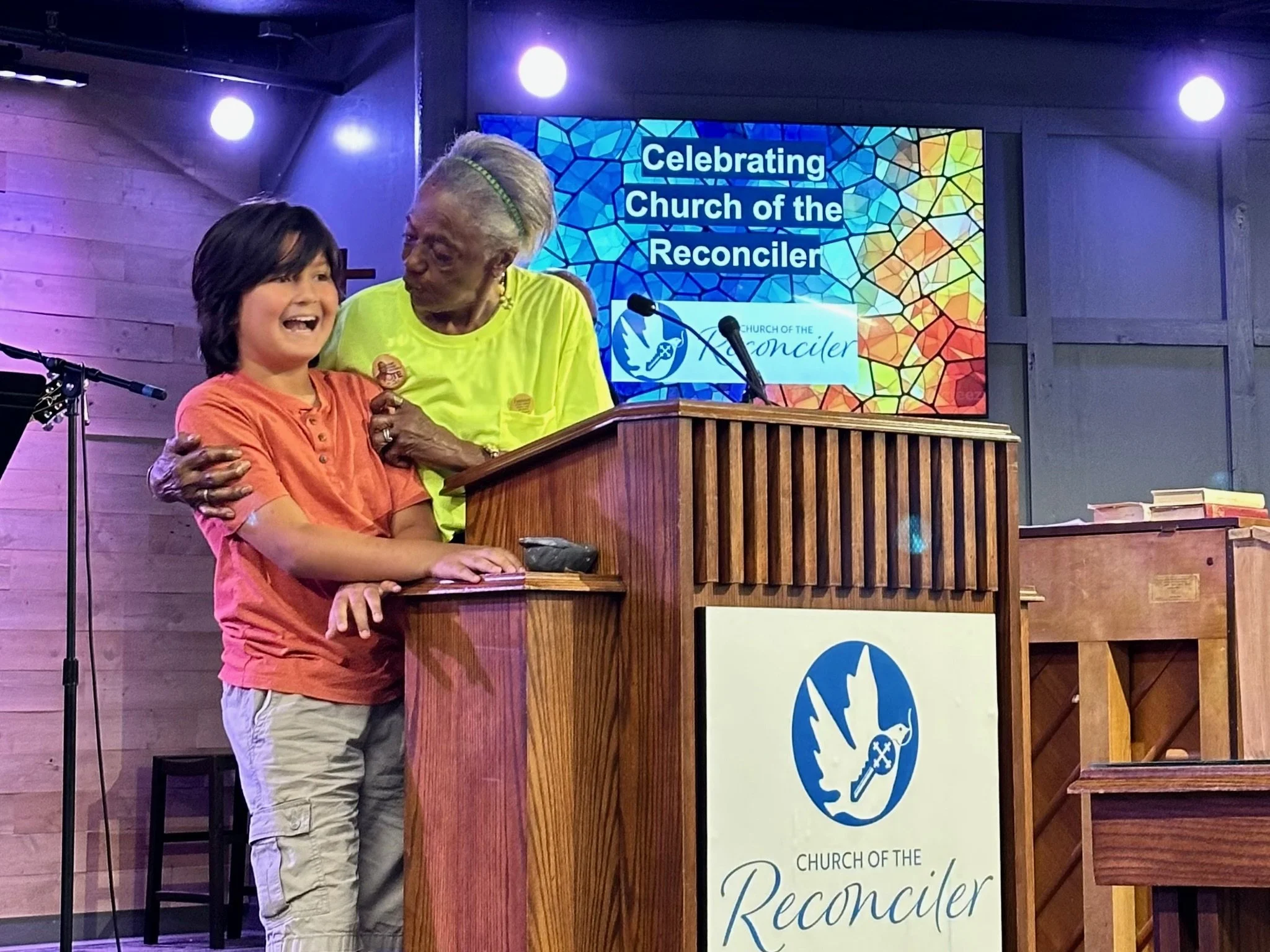
Angela* approached me during the worship service on Sunday morning. We had been taking steps that previous week to make her plan a reality. When I saw her walking towards me, I knew what she was going to ask: “Were you able to get me a bus pass?” “Yes,” I said. “The bus leaves this afternoon. You’re going home,” I told her. Tears welled up her in eyes and she gave me a big hug as she said, “I’m going home!”
In his book titled, The Home of God: A Brief Story of Everything, theologian Miroslav Volf argues that the goal of God in creation is for God to make God’s home with humans.** As Revelation 21:3 tells us, “See, the home of God is with humans.”
One Tuesday in support group Jimmekka, our case manager who leads this group, asked folks to check-in. Before Jimmekka finished speaking, Tammie volunteered to go first. She excitedly told the group, “Today I’m getting my keys to my apartment!” Over the next hour of the support group and then throughout the day, I heard Tammie say to anyone who would listen, “Did you hear I’m getting my keys for my apartment today.” She was going to have her own apartment, her own home. Tammie couldn't contain her excitement and joy.
At COTR, we help people, like Tammie and Angela, find a physical home. This is important and crucial work. At the same time, we know having a physical home does not necessarily mean someone has experienced the fullness of restoration. When one is fully restored, one is at home with God, with themselves, and with their community. Thus, homecoming is both our aim and our end at COTR.
The homecoming of Joseph and his brothers happens at the end of a long story. The story spans thirteen chapters. Moreover, it spans not many months or even many years, but decades. This aspect of the story should not be overlooked. Sometimes the road home is long, winding, and marked by unexpected setbacks and unforeseen switchbacks. No matter the path, our God, who longs to make God’s home with all of us and within each one of us, meets us on the way with a warm embrace and words of gracious welcome: “Come on home.”
Link: John Prine: Summer’s End
*Name has been changed to protect identity.
**Home can, of course, have negative connotations for those who have been forced to leave home or experienced violence at home. Yet, it remains an image that captures our desire to dwell with God.