
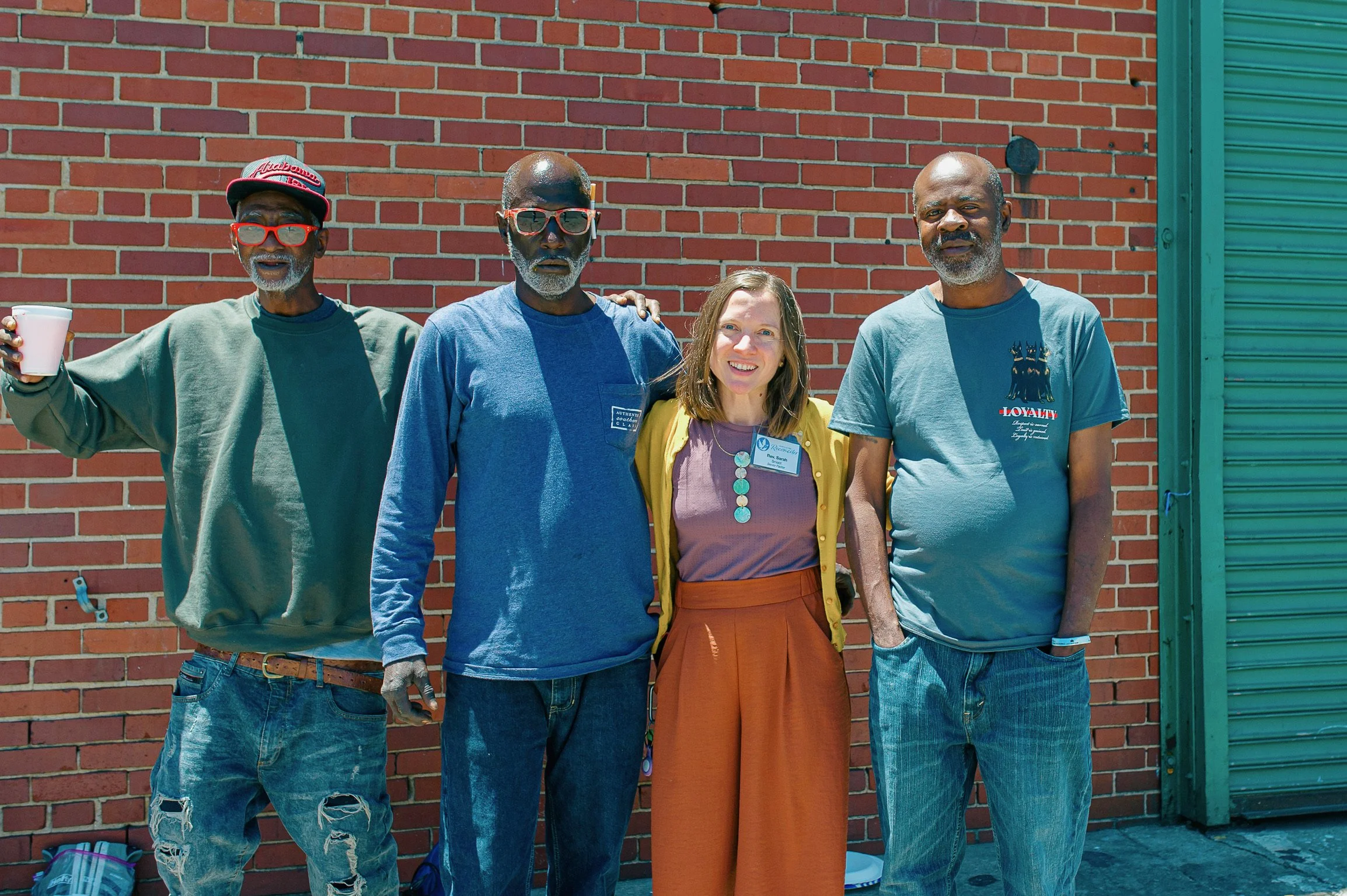
Victor, a familiar face at Church of the Reconciler, stopped me one morning at the entrance of the building. “Can you pray for me?”, asked Victor. I said yes and as I began to pray, Victor started to cry.
In the biblical story of Joseph, there is a lot of crying. These moments of crying occur in the midst of broken relationships with others being restored.
Reconciliation with others is the third entry in our series on our church name and why our mission is to seek restoration with: Self, Community, and God.
The Joseph narrative shows us three things about the messy work of restoration with others.
First, restoration with others involves tears. From Genesis 42 to Genesis 46, Joseph’s encounters with his brothers are marked by weeping. Initially, Joseph only cries in private. Yet, when Joseph reveals his identity to his brothers in Genesis 46, he is no longer able to hide his emotions. “And he kissed all his brothers and wept upon them; and after that his brothers talked with him” (Genesis 46:15). Joseph’s restoration with his brothers involves tears.
The narrator of the story does not offer any explanation or comments about these moments of weeping. Instead, we’re invited to ask, what is the significance of their tears?
“Wherever there is weeping," says Erasmo Leiva-Merikakis, "there is God. The water of our tears invites God to create a new world within ourselves." Not only within ourselves is God invited “to create a new world”, but also in our relationships with others. When a relationship needs to be restored it is because harm has been inflicted by one or more parties. There are wounds that need to be acknowledged. When one reaches the point of tears, those wounds are acknowledged and that act of acknowledgement makes room for restoration to begin.
Restoration with others, secondly, requires grace. In the story of Joseph, the grace Joseph shows his brothers is completely unexpected. All along Joseph’s brothers have been bracing for God’s punishment. “Alas, we are paying the penalty for what we did to our brother…Now there comes a reckoning for his blood”, they say to one another in Genesis 42. Old Testament scholar Walter Brueggeman says the brothers, “are bound by the power of an unforgiven past, immobilized by guilt, and driven by anxiety.” The brothers are expecting the hammer to come down. Surprisingly, Joseph does not bring down the hammer on his brothers. He gives them grace.
Restoration with others requires one to turn from the cycle of vengeance, to abandon the need to get even, and to give people what they do not deserve.
If you’re fortunate enough to attend prayer circle at Church of the Reconciler, you’ll most likely hear one of our long-time members, Rodney, speak about second chances. “To me”, he often says, “Church of the Reconciler is a place of second chances.” Church of the Reconciler is a place where he’s experienced the grace of second chances and seen others do the same.
Finally, restoration happens through imperfect people. In the story of Joseph there are no heroes. I love that about this story. No one is perfect, especially Joseph. Before we get to chapter 45, Joseph is shown to be “ruthless, cunning, and vengeful,” says Brueggemann. He plays tricks on his brothers during their time of need, he emotionally manipulates them, and he draws out the tension among them from his place of power. And yet, restoration happens.
The story of Joseph shows us that God, as Brueggemann puts it, “can create a real newness, an extrapolated freshness which negates the past, redefines the present, and opens futures.” It’s a story that gives me hope; because if God can work through Joseph and bring restoration to his family, then God can bring restoration to any community.
I see God bringing restoration to our community at Church of the Reconciler. I see God creating a place of second chances. And, let’s be honest, we all need a place of second chances.